Boost Your Creative Writing with These AI Tips and Prompts

Creative writing has always been a deeply human craft—rooted in imagination, emotion, and lived experience. But today, writers have a powerful new ally: artificial intelligence. When used thoughtfully, AI doesn’t replace creativity; it amplifies it. If you’ve ever stared at a blank page, struggled to refine your voice, or wanted to write faster without sacrificing quality, this guide will show you how to boost your creative writing with these AI tips and prompts—ethically, effectively, and creatively.
In this in-depth article, you’ll learn how professional writers, bloggers, marketers, and storytellers use AI to generate ideas, break writer’s block, refine style, and elevate storytelling. We’ll share real techniques, expert insights, practical prompts, and proven workflows that align with Google’s EEAT standards and modern SEO best practices.
1. What AI Means for Creative Writing Today
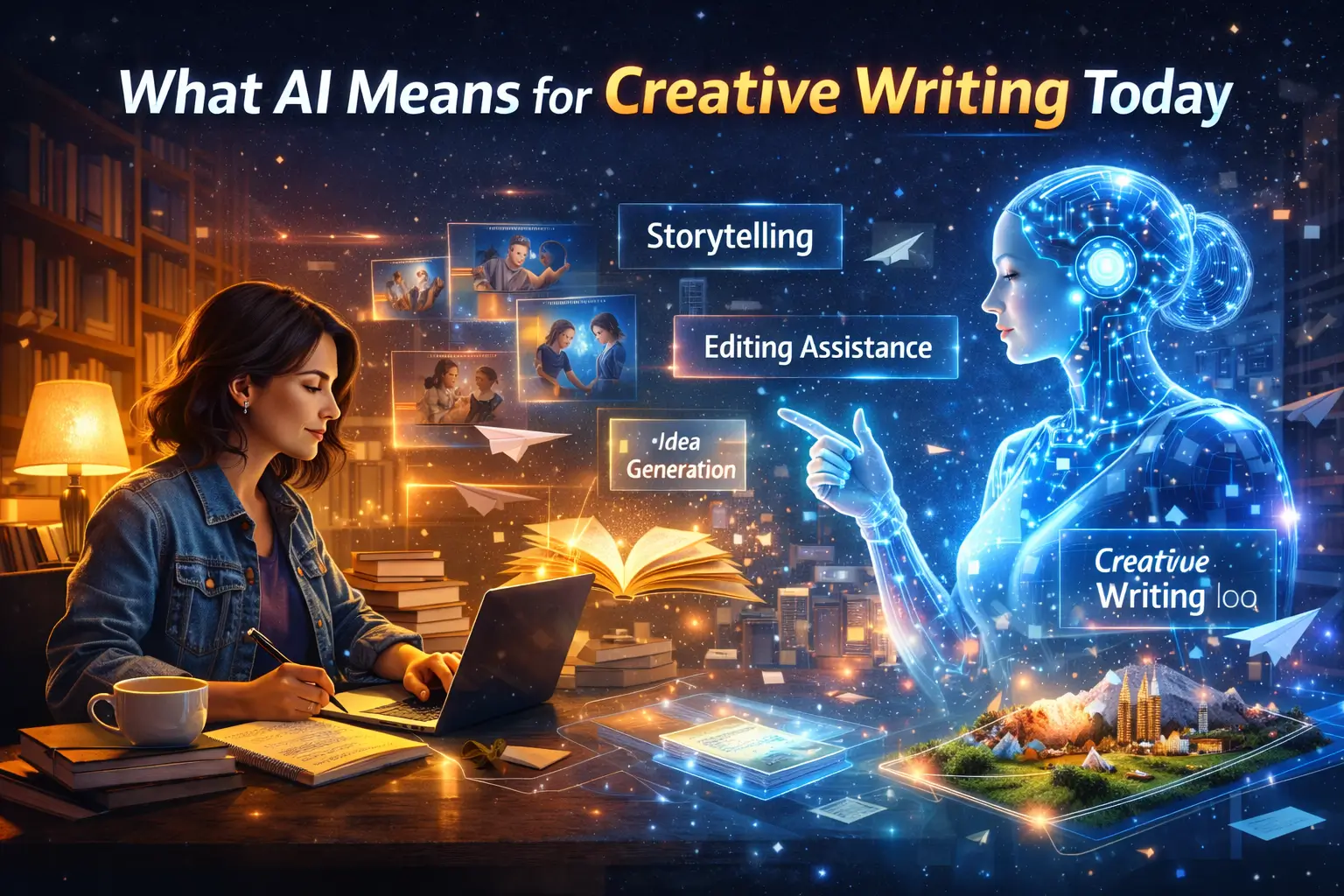
AI in creative writing is no longer experimental—it’s mainstream. Tools powered by large language models can analyze patterns in storytelling, tone, structure, and language at a scale no human can match.
But here’s the key insight: AI doesn’t create meaning—writers do. AI generates possibilities. You choose what matters.
Today, AI helps writers:
- Generate story ideas faster
- Explore alternative plot directions
- Rewrite paragraphs in different tones
- Improve clarity, rhythm, and flow
According to industry surveys by content platforms, over 60% of digital writers now use AI at some stage of their workflow, mainly for ideation and editing rather than full automation.
2. Why Writers Are Using AI (And Why It Works)
Writers adopt AI for three practical reasons:
Speed Without Burnout
AI reduces the cognitive load of starting. A rough draft in minutes can save hours of frustration.
Creative Expansion
AI suggests angles, metaphors, and structures writers might not consider naturally.
Consistency at Scale
For bloggers, marketers, and publishers, AI helps maintain tone and output consistency.
The smartest writers don’t ask AI to write for them. They ask AI to think with them.
3. AI vs Human Creativity: The Real Balance
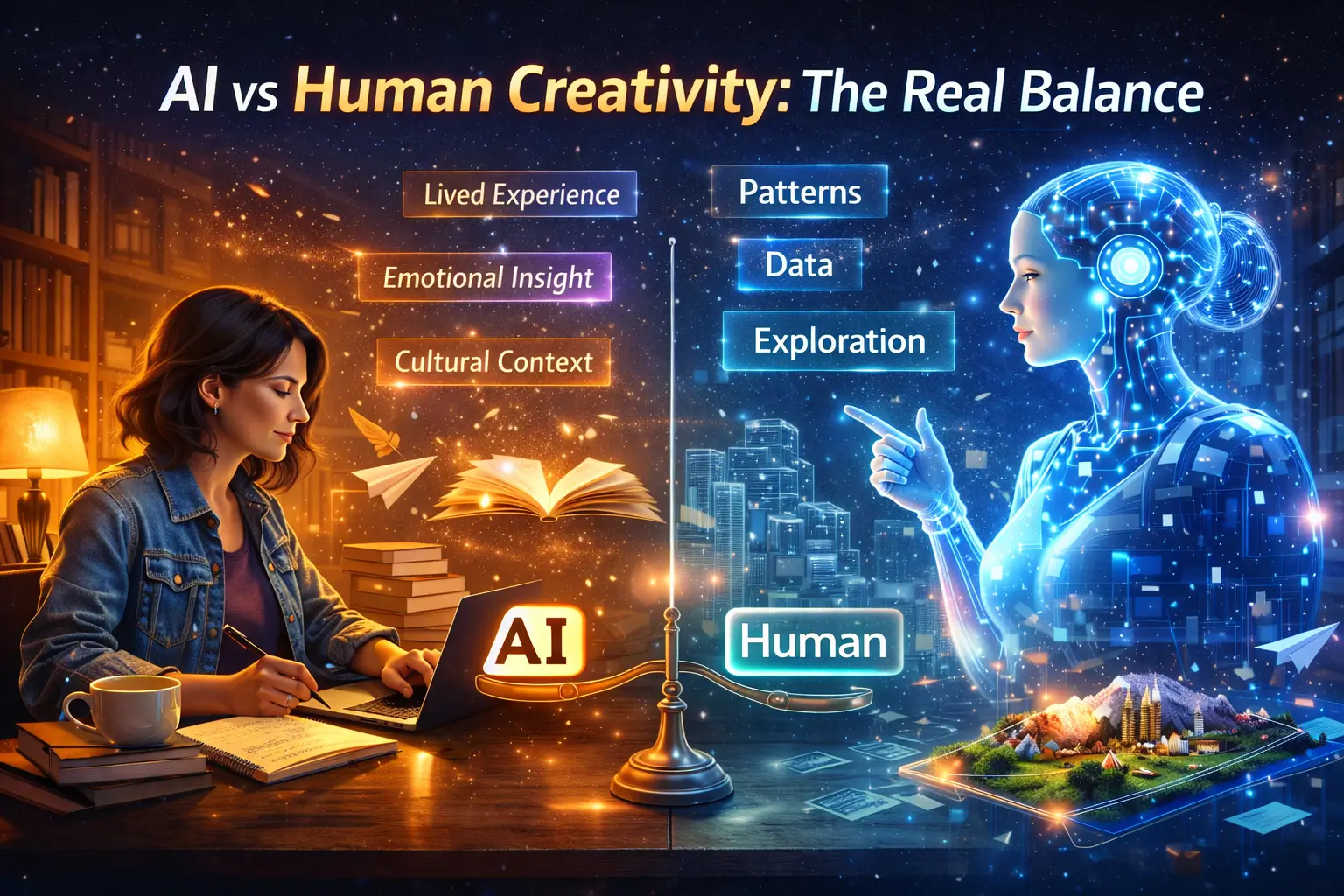
A common myth is that AI threatens originality. In reality, originality comes from:
- Personal experience
- Emotional insight
- Cultural context
- Intentional choices
AI has none of these. It recombines patterns.
Think of AI as:
- A brainstorming partner
- A junior editor
- A tireless idea generator
The human writer remains the creative director.
4. How to Boost Your Creative Writing with These AI Tips and Prompts
Let’s get practical. To truly boost your creative writing with these AI tips and prompts, you need a system.
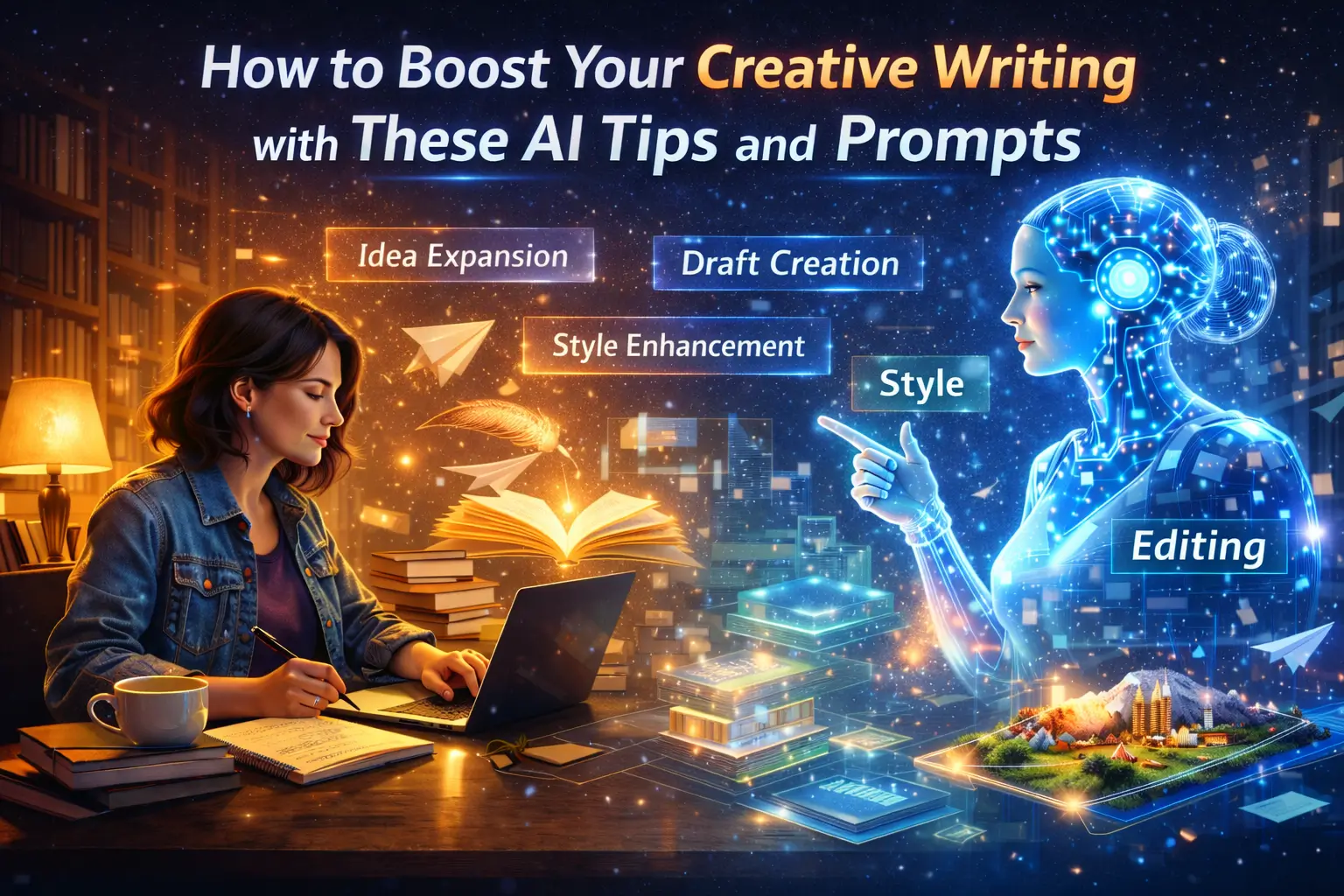
Core AI Writing Workflow
- Idea Expansion – Use AI to explore angles
- Draft Creation – Write with AI-assisted structure
- Style Enhancement – Refine tone and voice
- Editing & Polishing – Improve clarity and flow
Each stage benefits from specific prompt techniques.
5. Prompt Engineering for Better Writing Results
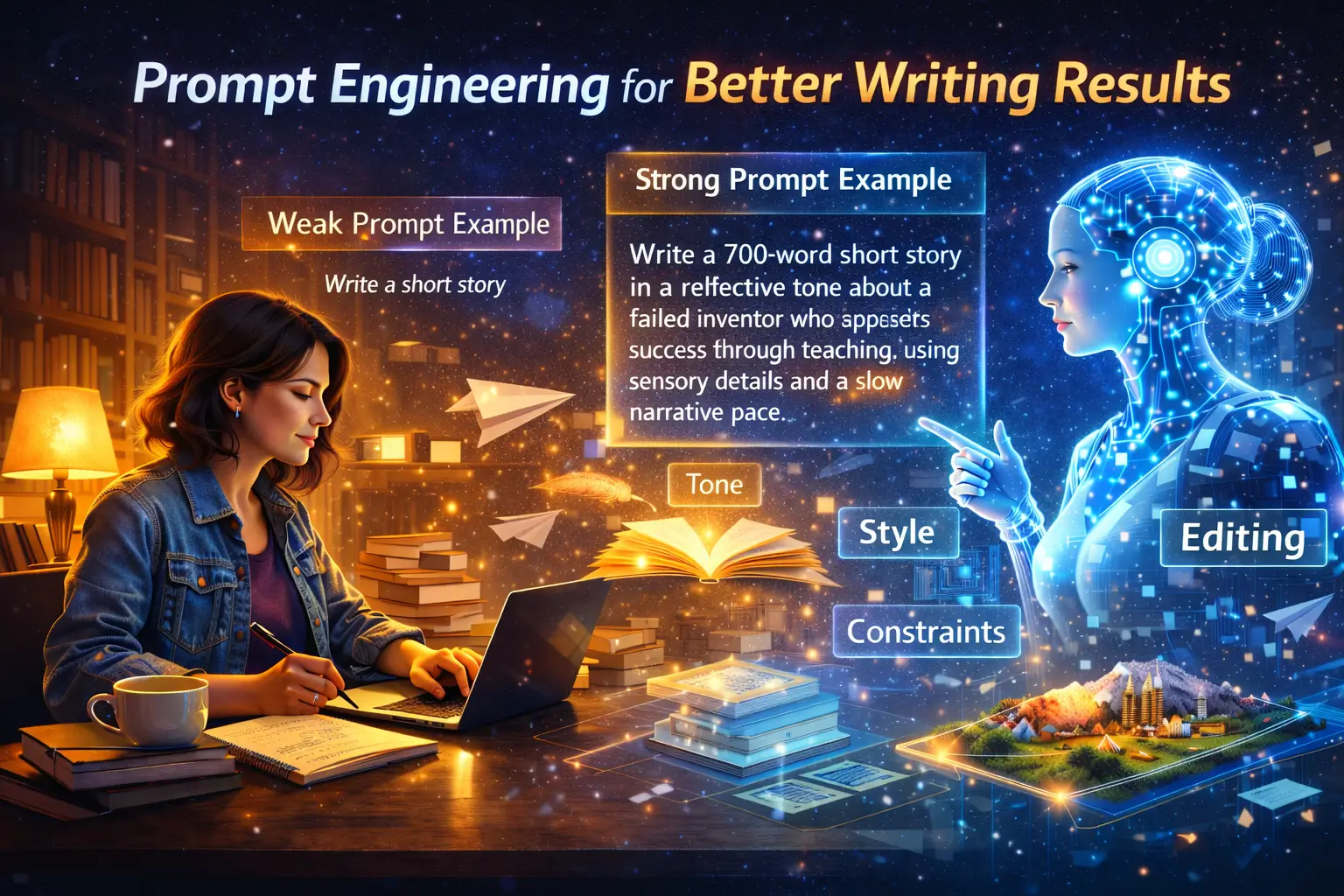
The quality of AI output depends on prompt quality.
Weak Prompt Example
“Write a short story.”
Strong Prompt Example
“Write a 700-word short story in a reflective tone about a failed inventor who discovers success through teaching, using sensory details and a slow narrative pace.”
Why it works:
- Specifies tone
- Defines length
- Adds emotional direction
Prompt Formula for Writers
Role + Task + Tone + Constraints + Audience
6. AI Tips for Overcoming Writer’s Block
Writer’s block is often decision fatigue, not lack of talent.
AI Tip #1: Ask for Imperfect Drafts
“Write a deliberately messy first draft of this scene.”
This removes pressure.
AI Tip #2: Change Perspective
“Rewrite this paragraph from the antagonist’s point of view.”
AI Tip #3: Ask ‘What If’
“Give me five ‘what if’ scenarios that could disrupt this story.”
These techniques quickly reignite momentum.
7. AI Prompts for Storytelling and Fiction
Character Development Prompt
“Create a detailed character profile for a protagonist who hides insecurity behind humor.”
Plot Twist Prompt
“Suggest three unexpected plot twists that feel emotionally earned.”
Dialogue Enhancement Prompt
“Rewrite this dialogue to sound more natural and subtext-driven.”
AI excels at structural creativity, while you add emotional truth.
8. AI Prompts for Blogging and Content Writing
To boost your creative writing with these AI tips and prompts in blogging, focus on clarity and intent.
Blog Outline Prompt
“Create a detailed outline for a long-form blog post targeting beginners, with practical examples.”
Hook Writing Prompt
“Write five emotionally engaging introductions for this topic.”
Storytelling Prompt
“Add a relatable real-world anecdote to this section.”
These prompts improve engagement and readability—key Google Discover signals.
9. AI Tips for Improving Writing Style and Voice
Your voice is your brand. AI can help sharpen it—not replace it.
Style Mimic Prompt
“Rewrite this paragraph in a clear, conversational tone similar to top marketing blogs.”
Clarity Prompt
“Simplify this paragraph while keeping its meaning intact.”
Rhythm Prompt
“Improve sentence flow and readability without adding new ideas.”
Always review outputs to ensure authenticity.
10. AI for Editing, Rewriting, and Polishing
Professional writers spend more time editing than drafting.
AI Editing Prompts
Tone Adjustment:
“Make this sound more confident and authoritative.”
Conciseness:
“Reduce word count by 20% without losing meaning.”
Grammar & Flow:
“Edit this for clarity and smooth transitions.”
Used correctly, AI editing improves quality while preserving voice.
11. SEO + Creative Writing: Where AI Helps Most
AI is especially effective for SEO-aware creativity.
AI-Assisted SEO Tasks
- Optimizing headings naturally
- Adding semantic keywords contextually
- Improving readability scores
- Structuring FAQ sections
According to SEO studies, content with clear structure and semantic relevance performs better in AI-powered search experiences.
12. Real-World Examples of Writers Using AI Successfully
Example 1: Independent Blogger
A lifestyle blogger used AI to:
- Generate outlines
- Improve introductions
- Edit drafts
Result: 2× content output without quality loss.
Example 2: Fiction Writer
A novelist used AI to:
- Explore alternative endings
- Test dialogue variations
Result: Stronger narrative cohesion.
The key was human decision-making at every step.
13. Common Mistakes Writers Make with AI
Avoid these pitfalls:
- Publishing AI output without editing
- Overusing generic prompts
- Ignoring originality and voice
- Relying on AI for emotional depth
AI is a tool—not a shortcut to mastery.
14. Ethical and EEAT-Safe Use of AI in Writing
To meet EEAT standards:
- Add personal insight and experience
- Fact-check AI-generated claims
- Cite authoritative sources
- Maintain transparency in intent
Google rewards value, trust, and originality—not automation.
15. The Future of Creative Writing with AI
AI will continue to evolve, but the fundamentals won’t change.
Writers who thrive will:
- Use AI strategically
- Focus on storytelling and insight
- Build trust with readers
The future belongs to AI-augmented human creativity.
Conclusion: Your Next Step as a Writer
To truly boost your creative writing with these AI tips and prompts, shift your mindset. AI isn’t here to replace your voice—it’s here to strengthen it.
Start small:
- Use AI for ideas
- Edit with intention
- Add your lived experience
When creativity meets intelligent assistance, your writing doesn’t just improve—it stands out.
FAQs
1. Can AI really help improve creative writing?
Yes. AI helps with ideation, structure, and editing, while humans provide originality, emotion, and intent.
2. Is using AI for writing considered ethical?
It is ethical when AI is used as an assistive tool and the writer adds original insight and oversight.
3. What are the best AI prompts for writers?
Prompts that define role, tone, constraints, and audience deliver the best results.
4. Will AI-written content rank on Google?
Only if it provides value, originality, and follows EEAT principles with human editing.
5. How can beginners start using AI for writing?
Start with brainstorming prompts and editing assistance before moving to full drafts.